LinkedIn Content Strategy for Founders: A 30-Day Plan
A LinkedIn content strategy for founders is a structured approach to publishing consistent, high value posts that build authority, attract leads, and grow an audience without requiring hours every day. Done right, a founder can post 4-5 times per week in under 30 minutes a day by planning content in batches and using the right workflow.
Most founders know they should be more active on LinkedIn. They just can't figure out how to make it sustainable. This plan solves that.
Table of contents
- Why founders need a LinkedIn content strategy
- The 30-minute-a-day rule
- Before you start: your content foundation
- Week 1: Build your base
- Week 2: Find your rhythm
- Week 3: Go deeper
- Week 4: Systematize and scale
- The 5 post formats every founder should use
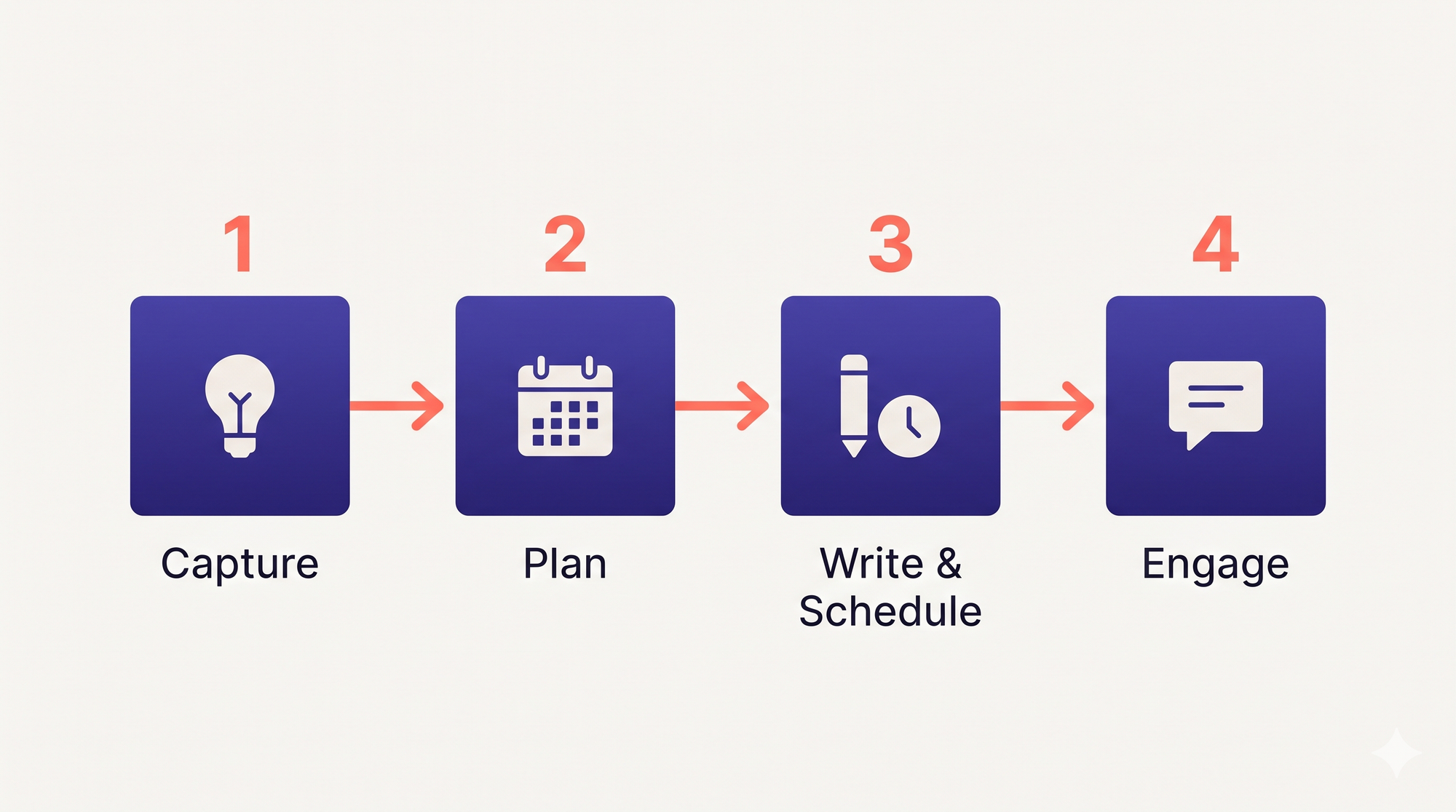
- How to create a month of content in an hour
- FAQs
Why founders need a LinkedIn content strategy
LinkedIn has over 1 billion members. Around 40% of them log in every month. But here's the number that matters for founders: only about 1% of LinkedIn users post content weekly.
That 1% owns the attention.
For a founder, LinkedIn isn't just a resume. It's a distribution channel. Every post is a chance to attract potential customers, early adopters, investors, or future hires. A well-run LinkedIn presence has replaced cold outreach for many early stage founders. People come to them because they've read their content and already trust them before the first conversation ever happens.
The problem isn't motivation. Most founders want to post. The problem is that without a system, posting LinkedIn content becomes another task that keeps getting pushed to "when I have time." And that time never comes.
This 30-day plan is built around one constraint: you are a busy founder with 30 minutes a day. That's it. The plan works within that.
The 40-minute-a-day rule
Here's how 40 minutes breaks down across a typical day:
- 5 minutes: Review and approve any scheduled posts
- 10 minutes: Write or refine one post (or batch write on Sunday)
- 20 minutes: Engage with comments on your posts and leave thoughtful comments on 3-5 posts in your niche
- 5 minutes: Save ideas, links, or observations to your content vault
Engagement is not optional. LinkedIn's algorithm amplifies posts that get comments in the first hour. If you post and disappear, you leave reach on the table. Showing up for 10 minutes after publishing moves the needle more than posting more frequently.
One more thing worth saying up front: batch your writing. The founders who post consistently don't write every day. They write once a week and schedule. We'll build that into the plan.
Before you start: your content foundation
Spend 60 minutes on this before Week 1 begins. You only do it once.
1. Define your one-line positioning
Finish this sentence: "I help [who] achieve [what] through [how]."
This becomes the lens for every piece of content you create. If a post doesn't connect back to this, it's probably not worth posting.
2. Pick three content pillars
Pillars are the recurring themes your content will orbit. For founders, a good starting framework looks like this:
- Pillar 1: Your industry or domain insight. What you know from being in the trenches.
- Pillar 2: Your founder journey. Behind-the-scenes moments, hard lessons, real mistakes.
- Pillar 3: Tactical value. Frameworks, how-tos, and tools your audience can actually use.
Three pillars means you always know what to write about. You rotate through them and you never stare at a blank screen.
3. Set up your content vault
You need a place to capture ideas throughout the week. A note on your phone, a Notion doc, or a dedicated tool like CannerAI's Context Vault all work. When something interesting happens, when a customer says something surprising, or when you read a sharp observation somewhere, capture it immediately. That becomes raw material for posts later.
4. Audit your profile
Your profile is a landing page. Before you start posting, run through these quickly:
- Headline: does it say what you do and for whom? Try this free tool to make your work faster.
- About section: does it tell a story or just list credentials?
- Featured section: is there anything there that shows proof of work? add any viral posts, newsletter/website , services etc.
Week 1: Build your base
Goal: publish 3 posts, establish your voice, learn what resonates
Week 1 is not about going viral. It's about showing up and getting three real posts live.
Day 1 (Sunday) - Batch writing session (45 minutes)
Write three posts. Use the three pillars you defined. One post per pillar.
Don't overthink format at this stage. Write the way you talk. Short paragraphs. One idea per post. A clear first line that earns the scroll.
Save all three as drafts. Schedule them for Tuesday, Thursday, and Saturday.
Day 2 (Monday) - Profile polish
Fix anything you flagged in your profile audit. This is your only admin day. After today, Monday is purely for idea capture.
Day 3 (Tuesday) - First post goes live
Spend your 30 minutes like this:
- First 20 minutes: engage on the post of our ICPs or people in the same niche with authority and following. Write meaningful comments not just I agree, good insights. ( do this everyday before 15 mins and after 15 mins of your post schedule time)
- Last 10 minutes: capture 2-3 ideas that surfaced during the week for next week's batch
Pro tip: Add 1 carousel per week, LinkedIn algo loves it.
Days 4-7 - Repeat the engagement routine
Same routine every day. Thirty minutes. Check your post. Engage genuinely. Capture ideas.
Week 1 reflection (do this on Saturday):
- Which post got the most engagement?
- What topic surprised you?
- Did you actually stick to 30 minutes?
Week 2: Find your rhythm
Goal: post 4 times, experiment with one new format
By Week 2 you have real data. One of your three posts from Week 1 likely performed better than the others. That's a signal, not a coincidence.
Sunday - Week 2 batch session (45 minutes)
Write four posts this week. Include:
- One post that expands on whatever worked in Week 1
- One contrarian take on something your industry commonly gets wrong
- One personal story with a business lesson attached
- One tactical post such as a framework, a checklist, or a process you follow
Schedule them across Monday, Wednesday, Friday, and Saturday.
The contrarian take format
This format works well for founders because it signals original thinking. The structure is simple.
Start with a common belief stated plainly. Then say you used to believe it too. Then share what changed your mind. Spend a few lines on the reframe, using a specific example from your own experience. Close with the one-sentence takeaway.
Don't manufacture a take just to sound interesting. Only do this when you genuinely disagree with something common in your space.
Engagement tactic for Week 2
Pick two or three people who are active in your niche and comment on their posts every day this week. Not "great post!" responses. Add something real. Disagree respectfully if you have a different view. Share a related data point. This builds genuine relationships and puts your name in front of their audience.
Week 3: Go deeper
Goal: post 4-5 times, publish at least one long-form post
Short posts build awareness. Long posts build trust. Most founders only do short. Week 3 is where you add depth.
What counts as a long-form post on LinkedIn
A long-form post on LinkedIn is not an article. It's a regular post that runs 900-1300 words, structured with clear paragraph breaks and a narrative that pulls the reader through. Think of it as a well-structured piece formatted for the feed.
Pick a topic you understand better than almost anyone in your space. Write the version of that post you wish you could have read two years ago.
Good structures for founders:
- "What I learned building [X] from zero to [milestone]"
- "The mistake I made in [situation] and what I'd do differently"
- "How we achieved [outcome] without [common assumption]"
Content ideas that work for founders every time
You don't need to come up with ideas from scratch. Here are sources that never dry up:
- Customer conversations. What questions do people keep asking you?
- Your own past mistakes. What took you three months to figure out that could save someone else three weeks?
- Industry articles. What's your actual reaction to a trend or a piece of research you read?
- Competitor comparisons. What do you do differently and why does it matter?
- Hiring and team lessons. What have you learned about building a team that you didn't expect?
Sunday - Week 3 batch
Write five posts this week:
- 1 long-form post
- 2 short posts under 300 words
- 1 list post (for example: "7 things I stopped doing as a founder that changed everything")
- 1 engagement post where you ask a question, run a poll, or share an observation and invite a response
Week 4: Systematize and scale
Goal: build a repeatable system you can run every week from here
Week 4 is where most founder LinkedIn plans fall apart. The novelty wears off. You need a system to take over, not just motivation. The good news is that if you've made it this far, you already have patterns to work from.
Review your 30-day data
Before you write anything this week, spend 20 minutes looking at your analytics:
- Which posts got the most impressions?
- Which got the most comments?
- Which drove profile views or new connection requests?
- What day and time seemed to perform best?
Impressions show reach. Comments show resonance. Profile views show intent. All three matter, but they tell you different things.
Build your repeatable content stack
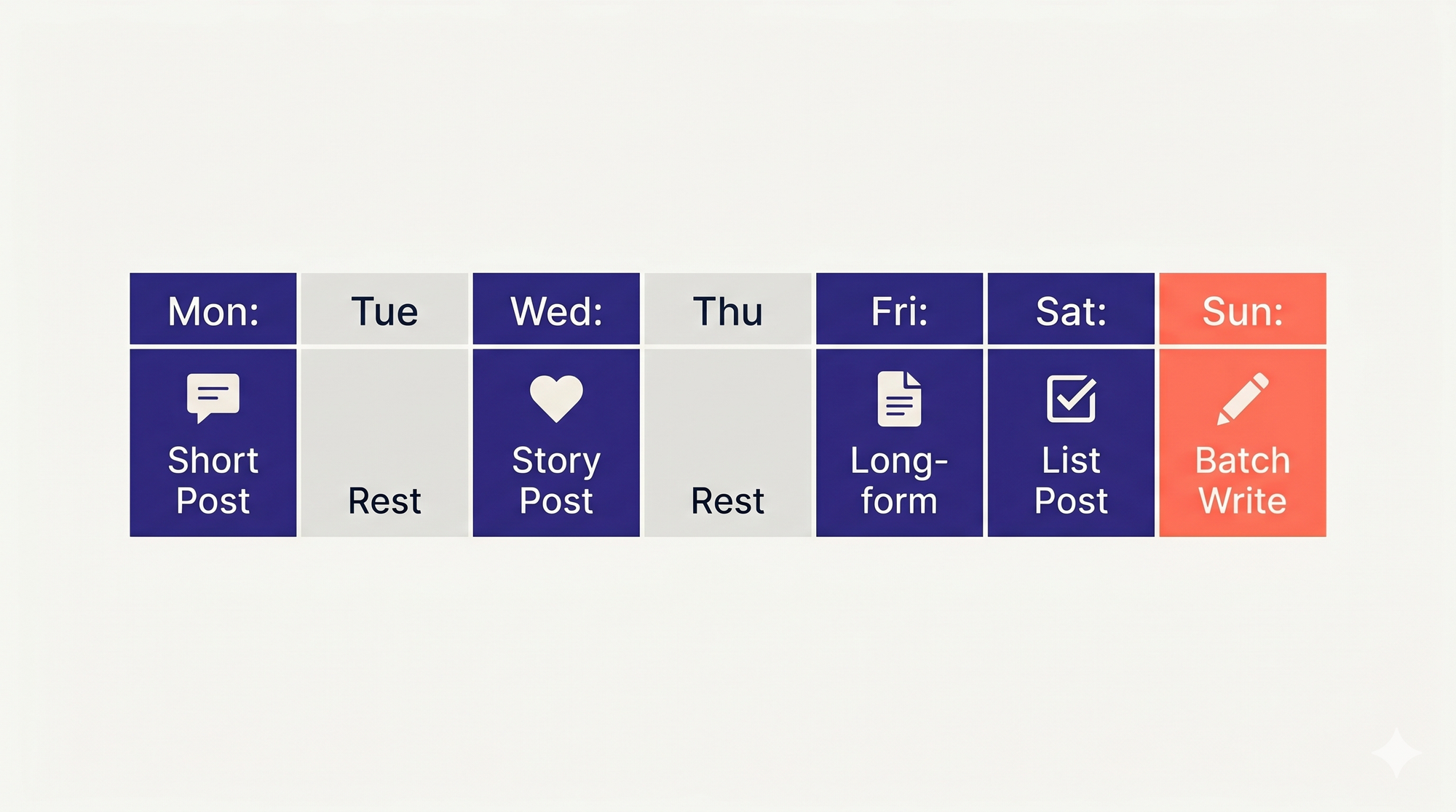
A content stack is a set of recurring post types you can produce almost on autopilot. By Week 4, you know which formats fit your voice. Lock in three or four and rotate through them every week.
Here's an example stack for a founder:
| Day | Format | Pillar |
|---|---|---|
| Monday | Short insight (150-300 words) | Industry |
| Wednesday | Story post | Founder journey |
| Friday | Tactical post or list | Tactical value |
| Saturday | Engagement post or poll | Any |
Set up your scheduling workflow
From Week 4 onward, the goal is one batch writing session per week (45-60 minutes), four posts queued, and zero daily writing stress.
A few tools that support this:
CannerAI handles research, writing, and scheduling inside one workspace. No tab switching. Founders who connect their YouTube sources can get post drafts generated automatically from any new video on a connected channel. The Context Vault keeps your captured ideas organized so your Sunday batch session starts with material ready, not a blank page. If you post on both LinkedIn and X, CannerAI publishes to both from the same place.
LinkedIn's native scheduler works for basic queuing but offers no research or AI writing support.
Buffer covers multi-platform scheduling with limited LinkedIn-specific features.
The 5 post formats every founder should use
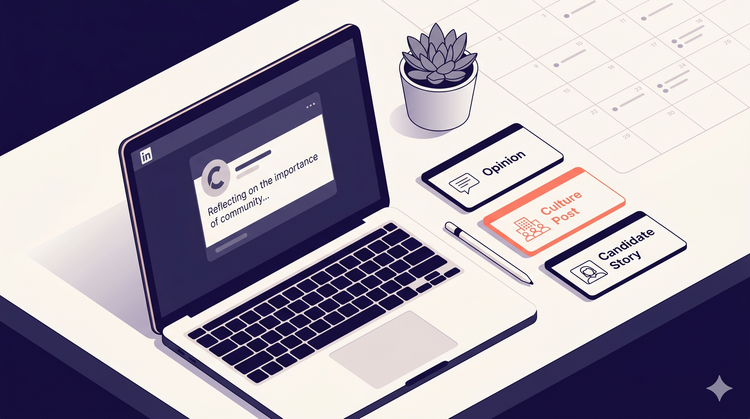
These formats work because they match what LinkedIn rewards and what people actually stop to read.
1. The lesson post
One thing you learned, backed by a specific story. "I fired our first marketing hire after six weeks. Here's what I wish I'd seen earlier." Personal, honest, and specific enough to feel real.
2. The number post
Start with a surprising or concrete number. "We hit $100K ARR without running a single paid ad. Here's what we did instead." Numbers create instant context and set expectations that the post has to deliver on.
3. The list post
Numbered lists are scannable. "5 things I'd tell my 2022 self as a first-time founder." Make each item genuinely useful. No padding.
4. The behind-the-scenes post
Show the process, not just the result. Share a screenshot, a draft, a decision you almost made differently, or a moment that almost broke the company. Transparency builds trust faster than polished positioning ever will.
5. The perspective post
Take a clear stance on something relevant to your niche. LinkedIn rewards specificity. "Your product roadmap is too long and it's slowing you down" outperforms "Here are some thoughts on product strategy" every time. Don't hedge the take.
Here are some of my well performed posts using different formats:
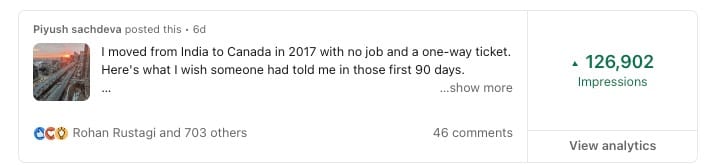
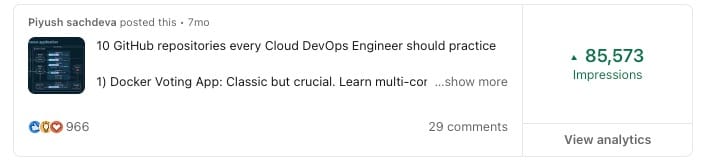
You can see more here: LinkedIn-Piyush Sachdeva
How to create a month of content in an hour
This is the actual system once the 30-day plan is done.
Step 1 (15 min): Dump your ideas
At the start of each month, do a brain dump. Review your content vault, customer call notes, and anything interesting you've bookmarked. Aim for 20 rough ideas. You'll only use 16-18 of them.
Step 2 (5 min): Categorize by pillar and format
Sort your ideas into your three pillars and match each one to a post format. This becomes your month's content calendar. At this point, you know exactly what you're writing and why.
Step 3 (30 min): Write all four weeks
With ideas organized and formats chosen, writing moves fast. Short posts take 5-7 minutes. A long-form post takes 15-20. One hour covers a full month if the prep is done.
Step 4 (10 min): Schedule everything
Queue all posts in your scheduling tool. Month done.
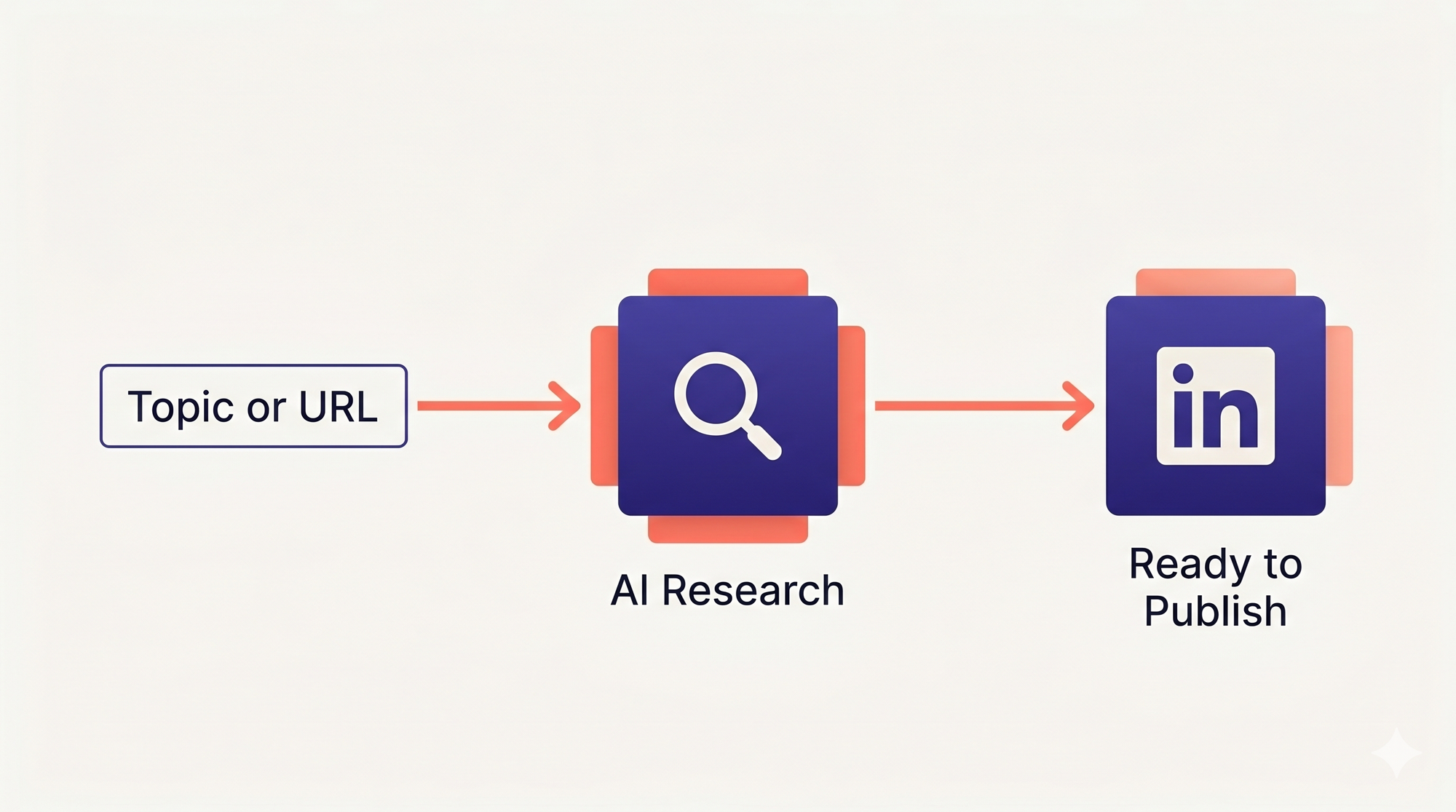
CannerAI's research-to-post feature compresses Step 3 significantly. Drop in a URL or topic and it drafts a post in your voice. If you're repurposing content from a YouTube video, a podcast, or a blog post, the Connectors feature handles draft generation automatically. Your job becomes reviewing and approving, not writing from scratch.
FAQs
How often should founders post on LinkedIn?
Founders building a personal brand should aim for 4-5 posts per week. Posting daily works if quality holds up, but consistency matters more than frequency. Three solid posts per week will outperform seven thin ones. The key is to batch-write once a week so daily publishing doesn't require daily effort.
What should a founder post about on LinkedIn?
The most effective LinkedIn content for founders comes from three areas: industry insight from being in the market, the real founder journey including failures, and tactical value your audience can apply right away. Rotating across all three keeps your feed varied without losing focus or voice.
How long should a LinkedIn post be for founders?
Short posts in the 150-300 word range work well for opinions and quick observations. Longer posts in the 800-1300 word range work well for stories and deep dives. Most founders benefit from mixing both: two or three short posts per week and one longer one. The first line of any post is the most important. It decides whether someone keeps reading.
How do I come up with LinkedIn content ideas as a founder?
The best ideas come from customer conversations, your own past mistakes, strong opinions about your industry, and content you already consume like articles, podcasts, and YouTube videos. Keep a running capture list throughout the week so your Sunday writing session starts with raw material. Tools like CannerAI's Context Vault are built specifically for this kind of ongoing idea capture.
Can I repurpose content for LinkedIn from other sources?
Yes, and you should. A podcast episode, YouTube video, or long blog post can become 4-6 LinkedIn posts. The key is to extract specific insights rather than summarizing. "This video says X" is boring. "I watched something that challenged everything I believed about Y, and here's what actually changed my mind" is how you repurpose and add your voice at the same time. CannerAI's Connectors feature automates this for YouTube. Connect a channel and get draft posts generated automatically when new videos go live.
How do I measure if my LinkedIn content strategy is working?
Track three things: impressions (reach), comments (resonance), and profile views (intent). In the first 30 days, weight comments more heavily than impressions. Comments mean someone engaged enough to respond, which is a stronger signal than passive scrolling. After 60-90 days, look for patterns around which topics drive profile views or connection requests from people in your target customer profile. That's your best-performing content.
What is the biggest mistake founders make on LinkedIn?
Posting sporadically and giving up before the algorithm builds any momentum. LinkedIn rewards consistency. Most founders see minimal traction in the first four weeks and stop. The accounts that grow are the ones that showed up consistently for 60-90 days before expecting results. The second most common mistake is posting about the product rather than the problem. Readers follow founders for perspective and insight, not product announcements.


Member discussion