LinkedIn for Recruiters: Content Strategy to Attract Top Talent
LinkedIn for recruiters is not just a place to post job listings and wait anymore. In 2026, top candidates in every field get dozens of InMails a week. The ones who respond are the ones who already know you, trust you, and feel like your company is a good fit for them. That trust does not come from a job posting. It comes from content.
This guide walks through how recruiters build employer brand and attract quality candidates through a consistent LinkedIn content strategy, including how to do it without spending three hours a day writing posts.
Table of Contents
- Why LinkedIn content matters more than InMail for recruiters
- What recruiter LinkedIn content actually looks like
- Building your employer brand on LinkedIn
- The recruiter LinkedIn content strategy that works
- How to find content ideas without running out
- Posting consistently when you're already stretched thin
- Measuring what's working
- FAQs
Why LinkedIn Content Matters More Than InMail for Recruiters
Here is a number worth sitting with. LinkedIn's own research shows that candidates who already follow a company are twice as likely to respond to recruiter outreach compared to cold contacts. Twice.
That follower relationship starts with content. When a strong candidate sees you posting regularly about team culture, your hiring philosophy, or what it is actually like to work at your company, you have already warmed them up before you ever send a message.
Cold InMail works when volume is the goal. Content works when quality is the goal.
Recruiters who think like marketers, who build an audience, earn trust, and stay top of mind, consistently pull better candidates into their pipeline than those relying purely on database searches and spray-and-pray outreach. That is the shift happening in talent acquisition right now.
What Recruiter LinkedIn Content Actually Looks Like
There is a common misconception that recruiter LinkedIn content just means sharing job posts. That is not a content strategy. That is a bulletin board.
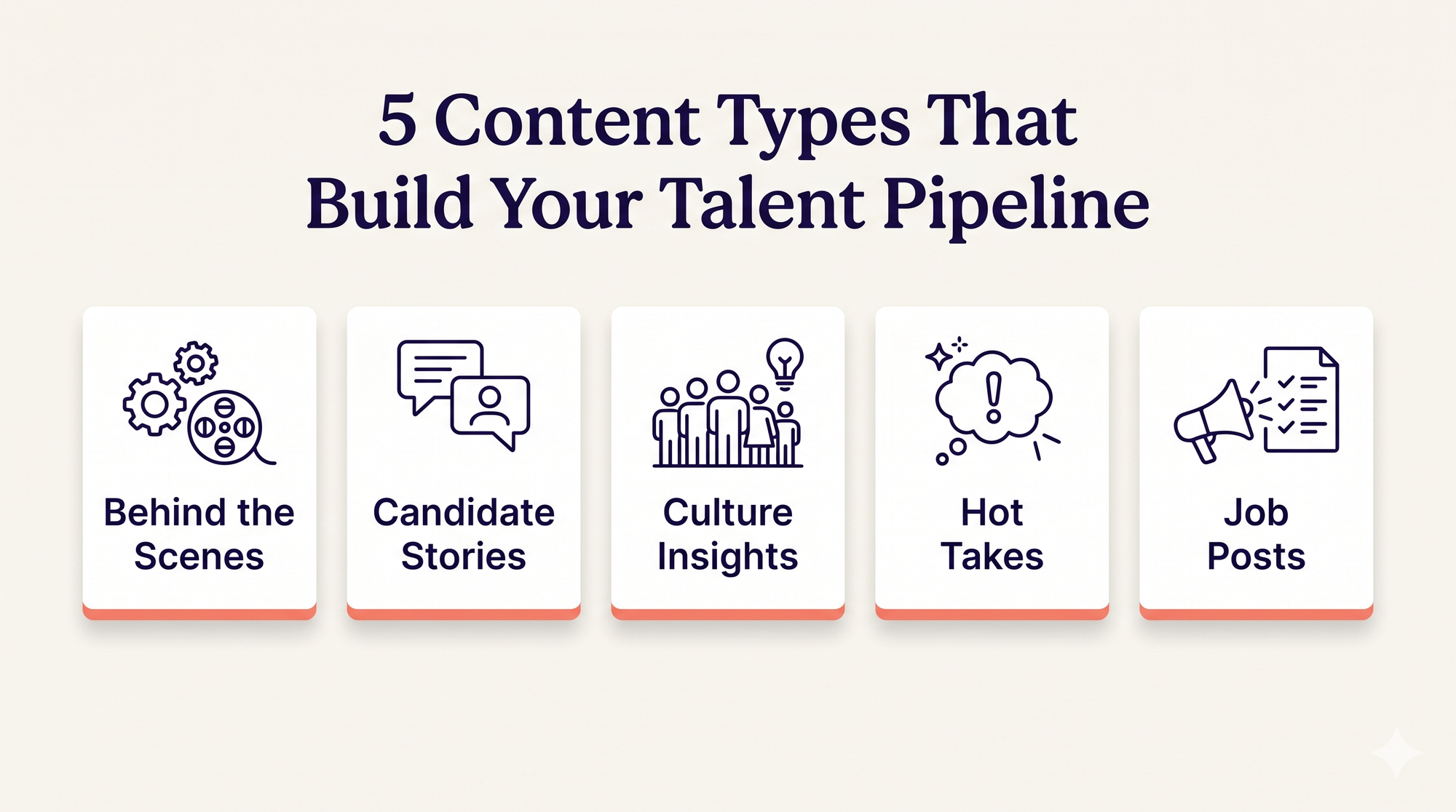
The content that actually builds a talent pipeline looks more like this:
Behind-the-scenes posts. A photo from a team lunch with a two-line caption about what your engineering team is working on. No polished copy needed. Authenticity beats production value every time.
Candidate success stories. A short post about someone you placed six months ago, where they are now, what the role did for their career. This is social proof for future candidates and shows you care about outcomes, not just placements.
Culture insights. What does onboarding look like at your company? How do you handle remote work? What does the interview process actually involve? These posts answer the questions candidates are too nervous to ask directly.
Opinion posts. Something you genuinely believe about hiring, interviews, or the job market that might be slightly controversial. These get engagement, and engagement grows your reach.
Job posts done right. When you do post a role, make it a story instead of a bullet list. Why is the team hiring? What problem will this person solve? What kind of person thrives here?
Building Your Employer Brand on LinkedIn
Employer branding on LinkedIn is really just the sum of every post, comment, and interaction your company and team makes on the platform. But it is worth being deliberate about it.
A recruiter's personal brand and the company's employer brand work together. Candidates check both. The company page tells them what the company stands for. Your personal profile tells them what it is like to work with you specifically.
Three things that consistently build recruiter credibility on LinkedIn:
A consistent voice. You do not need to be polished or poetic. You need to sound like yourself, every single time. Candidates can feel when a post was written by committee versus written by a human who actually works there.
Specificity over generality. "We have a great culture" means nothing. "We close laptops at 5pm and our CTO still takes PTO every quarter" means something. Specific details build more trust than any adjective ever will.
Responding to comments. When candidates comment on your posts, even with a quick question or a one-word reaction, respond. That single reply is often the difference between them remembering you and scrolling past you forever.
A consistent LinkedIn content strategy turns cold outreach into warm conversations before you ever send the first message.
See how CannerAI helps recruiters post consistentlyThe Recruiter LinkedIn Content Strategy That Works
A content strategy does not have to mean a 20-page document. For a recruiter, it can be as simple as a weekly rhythm.
Monday: Culture or team post. What is happening this week, a team win, a behind-the-scenes moment.
Wednesday: Opinion or insight post. Something you genuinely believe about hiring, candidate experience, or the job market right now.
Friday: Role highlight or candidate story. A job post told as a story, or a brief success story from a recent placement.
That is three posts a week. That is enough to stay consistently visible to the audience you are building.
The core principle here is to mix your post types. If every post is a job listing, you will train your audience to ignore you. If every post is a hot take, you will attract engagement but not candidates. The mix is what creates an audience that knows you, likes you, and reaches out when they are ready to make a move.
How to Find Content Ideas Without Running Out
The main reason recruiters stop posting consistently is not laziness. It is not knowing what to say. Here is a simple system to fix that.
Mine your work week. Every week you have real conversations with candidates and hiring managers. Something surprising, funny, frustrating, or insightful comes up. Write it down. That is a post.
Turn job requirements into stories. Every job description has a backstory. Why is this team hiring? What happened that created this need? That context makes a far better post than the JD itself does.
Repurpose industry content. When you read an article about the job market, a hiring trend, or candidate behavior, write your take on it. Your perspective on existing content is original content.
Ask your team. The people you are hiring for have opinions about their own field. A quick Slack message asking "what would you tell a candidate considering this role?" can easily turn into three or four authentic LinkedIn posts.
Posting Consistently When You're Already Stretched Thin
Talent acquisition is not a low-volume job. You are managing pipelines, screening calls, stakeholder updates, and offer negotiations at the same time. Writing LinkedIn content is always the first thing to get dropped.
The fix most recruiters never try: separate the thinking from the writing.
The thinking, the insight, the story, the opinion, only comes from you. No tool can replace that part. But the drafting, formatting, and scheduling of a post from that raw idea? That part can be systematized.
This is where a tool like CannerAI fits into a recruiter's workflow. You give it a topic or a URL, an article you just read, a story from your week, a job post you want to turn into a narrative, and it researches the angle and drafts the post in your voice. Not generic AI output. Something that actually sounds like you, because it learns how you write over time.
The Connectors feature is particularly useful for recruiters who follow YouTube channels on talent acquisition, HR trends, or employer branding. When a new video publishes on a connected channel, CannerAI auto-generates post drafts from that content in your personal style. You review, edit if needed, and approve. The post goes out without you spending 40 minutes turning a video into a LinkedIn caption.
For a recruiter posting three times a week, that workflow alone saves two or more hours of writing time every week.
Measuring What's Working
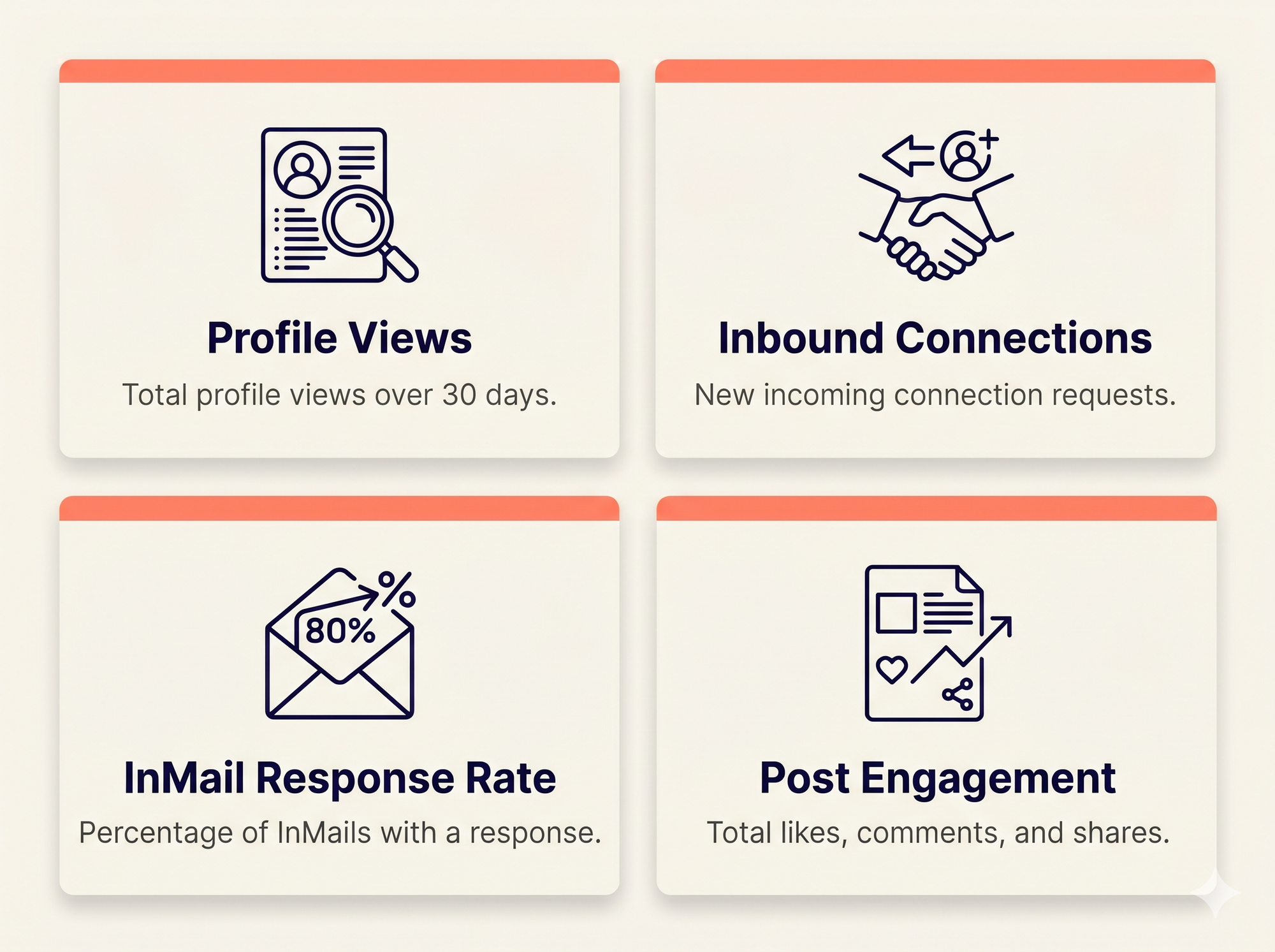
A content strategy without measurement is just guessing. For recruiter LinkedIn content, these are the metrics that actually tell you something useful.
Profile views. Are more candidates landing on your profile after posts go live? This is the clearest signal that your content is reaching the right people.
Connection requests from target candidates. When your ideal candidates start finding and connecting with you rather than the other way around, your content is doing its job.
InMail response rates. Track whether candidates who engaged with your content before receiving an InMail respond at a higher rate than cold contacts. They will.
Post engagement rate. Likes and comments show you which content types actually connect with your audience. Over time this tells you what to keep doing and what to cut.
LinkedIn's native analytics surface all of this at the post level. Review it monthly rather than weekly. Patterns take time to show up.
FAQs
What type of content should recruiters post on LinkedIn?
Recruiters do best on LinkedIn with a mix of content types: behind-the-scenes culture posts, candidate success stories, opinion posts on hiring trends, and role highlights framed as stories rather than job listings. Posting only job listings trains your audience to skip past you. A balanced mix builds an audience that trusts you before they ever need a new role.
How often should a recruiter post on LinkedIn?
Three times a week is plenty for most recruiters to stay consistently visible without burning out. One culture or team post, one opinion or insight post, and one role or candidate story per week covers the mix. Consistency over six months matters far more than how often you post in any single week.
What is employer branding on LinkedIn and why does it matter?
Employer branding on LinkedIn is the impression your company and team make on candidates through content, comments, and general activity on the platform. It matters because candidates research companies before they respond to outreach. A recruiter with a visible, authentic presence gets warmer responses because candidates already know who they are talking to before the first message lands.
How do recruiters attract passive candidates on LinkedIn?
Passive candidates are not looking at job boards. They are scrolling LinkedIn. The way to reach them is consistent content that shows up in their feed over time, so when they are finally ready to make a move, they think of you first. Culture posts, team wins, and honest behind-the-scenes content do more for passive talent attraction than any outreach campaign.
Does personal brand matter for in-house recruiters, not just agency recruiters?
Yes, equally. Candidates evaluating a company will also evaluate the person recruiting them. A recruiter with a visible, consistent LinkedIn presence signals that the company values people rather than just headcount. It also makes candidates more comfortable in the process because they feel like they already know who they are talking to.
How can recruiters write LinkedIn posts faster without losing authenticity?
The most practical approach is to separate the thinking from the writing. Your insight, story, and opinion have to come from you. But drafting and scheduling that raw idea can be handled by tools like CannerAI, which learns your voice and generates posts in your style from a topic or URL. You stay authentic. You just stop spending 45 minutes on every single post.
What should recruiters avoid posting on LinkedIn?
Avoid content that feels performative rather than real: over-polished inspirational quotes, copy-pasted company press releases with no personal take, or job listings pulled straight from the ATS. Candidates can tell the difference between a human voice and a marketing department. Specific, honest, slightly imperfect posts almost always outperform the professionally written ones.
Member discussion