LinkedIn vs X/Twitter for Personal Branding in 2026: Where Should You Actually Focus?
LinkedIn vs X for personal branding comes down to one question: are you trying to build credibility or reach? LinkedIn gives you a professional audience and strong lead conversion. X gives you faster viral potential and real-time cultural weight. For most founders, consultants, and creators, the honest answer is that neither platform alone is the right call in 2026.
You've probably gone back and forth on this. Maybe you're posting consistently on LinkedIn and wondering if you're missing something on X. Or you've been active on X for months and your LinkedIn profile looks like it hasn't moved since 2023.
Both feelings are valid. And both are pointing at the same problem: splitting attention without a system rarely works.
This post breaks down exactly what each platform does well, where each one falls short, and how to decide where your energy belongs right now.
Table of Contents
- How LinkedIn and X Actually Differ
- LinkedIn in 2026: Strengths and Weaknesses
- X in 2026: Strengths and Weaknesses
- Which Platform Fits Your Goal?
- Why the Best Strategy Is Both
- FAQs
How LinkedIn and X Actually Differ
Before picking one, you need to understand what you're actually comparing. These platforms were built with completely different intentions, and that shapes everything: the audience, the algorithm, the culture, and what "growth" even means on each one.
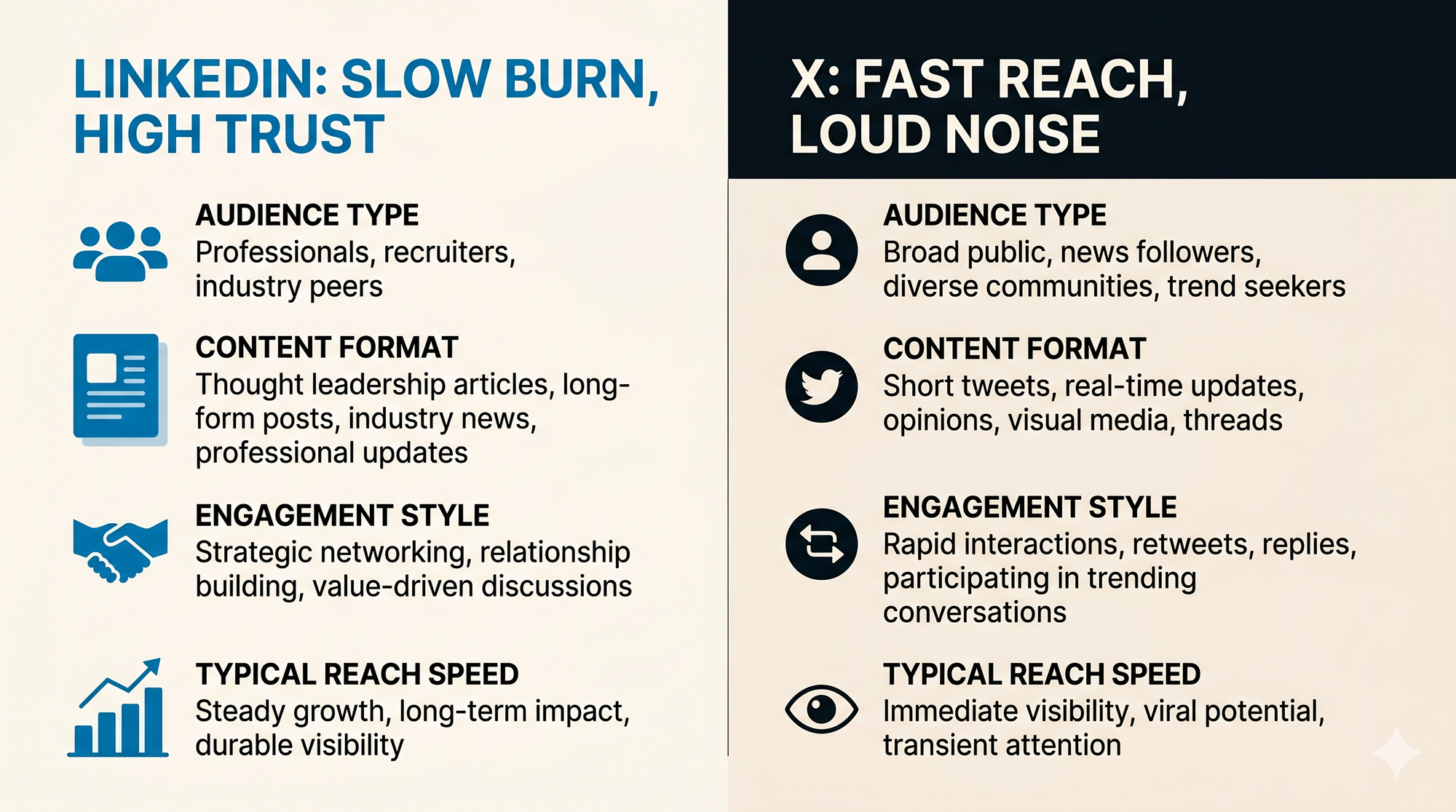
LinkedIn is a professional network. People show up with a career context already attached. When someone reads your post on LinkedIn, they know you're a founder, or a cloud engineer, or a marketing consultant. That context travels with you automatically. The content that performs best tends to be personal stories tied to professional lessons, long-form opinion pieces, and practical how-to content. The engagement is slower but stickier.
X is a public conversation platform. People show up without much context, and you earn their attention fast or not at all. The best content on X is sharp, opinionated, and built for sharing. A single tweet can reach 100,000 people overnight. But those same people might never remember your name the next morning.
The culture gap matters too. LinkedIn users tend to be more forgiving, more generous with encouragement, and more likely to engage with vulnerable or detailed posts. X rewards brevity, wit, and strong takes. A post that does well on LinkedIn will usually land flat on X if you just copy and paste it. And vice versa.
LinkedIn in 2026: Strengths and Weaknesses
LinkedIn has quietly become one of the most powerful organic reach opportunities on the internet right now. It still surprises people. But the numbers back it up: posts from individual creators consistently outperform company page posts, and the platform's algorithm rewards content that gets saves and comments over content that just gets likes.
Where LinkedIn wins:
- Professional credibility. Your profile is your resume, portfolio, and first impression all in one. When someone Googles your name, your LinkedIn profile is usually one of the first results. That matters if you're selling services, consulting, or building a business.
- B2B lead generation. If your target audience is other businesses or professionals, LinkedIn is the only social platform where those people are actively in a buying mindset. Recruiters, investors, and potential clients are scrolling LinkedIn with professional intent.
- Algorithm that rewards depth. LinkedIn gives longer posts real estate. A 1,000-word personal story or detailed breakdown can absolutely take off if it earns early engagement. The platform extends reach when content gets meaningful comments, not just passive scrolls.
- Recruiter and investor visibility. If you're job hunting or raising a round, there is no substitute.
Where LinkedIn falls short:
- Slow to build momentum. Growing from 0 to 1,000 followers on LinkedIn takes longer than on X, assuming equal effort. The network effect on LinkedIn is slower to compound.
- Younger audience decay. LinkedIn's active posting base skews older. If you're trying to reach Gen Z or early-career professionals who are just starting out, that cohort is spending more time on other platforms.
- Content formatting limitations. LinkedIn doesn't support bold, italic, or proper rich text natively. You need a workaround (like CannerAI's built-in LinkedIn Post Formatter) to get text styling that makes posts easier to scan.
- Low virality ceiling. A post rarely goes beyond your second-degree network unless it truly catches fire. On X, a post from an account with 200 followers can reach millions if one big account shares it.
X in 2026: Strengths and Weaknesses
X has been through a turbulent few years and the user base has fragmented some. But writing it off as a personal branding platform would be a mistake. For specific niches, especially tech, crypto, media, marketing, and startups, X is still the dominant conversation layer.
Where X wins:
- Real-time reach. Breaking news, live takes, trending topics. If you're a founder commenting on something happening right now, X is where that conversation is happening. LinkedIn is not a real-time platform.
- Thought leader culture. X has a strong tradition of building reputation through consistent, high-quality tweets. Accounts in tech and startups with 10,000 to 50,000 followers command real influence. Your ideas can spread to people you'd never reach otherwise.
- Viral potential. The RT and quote-post mechanics are powerful. A single sharp take can compound exponentially in a way LinkedIn content almost never does.
- Access. You can reply to almost anyone on X. Founders, VCs, journalists, executives. That kind of direct access to high-influence accounts is rare, and it's still very real on X.
Where X falls short:
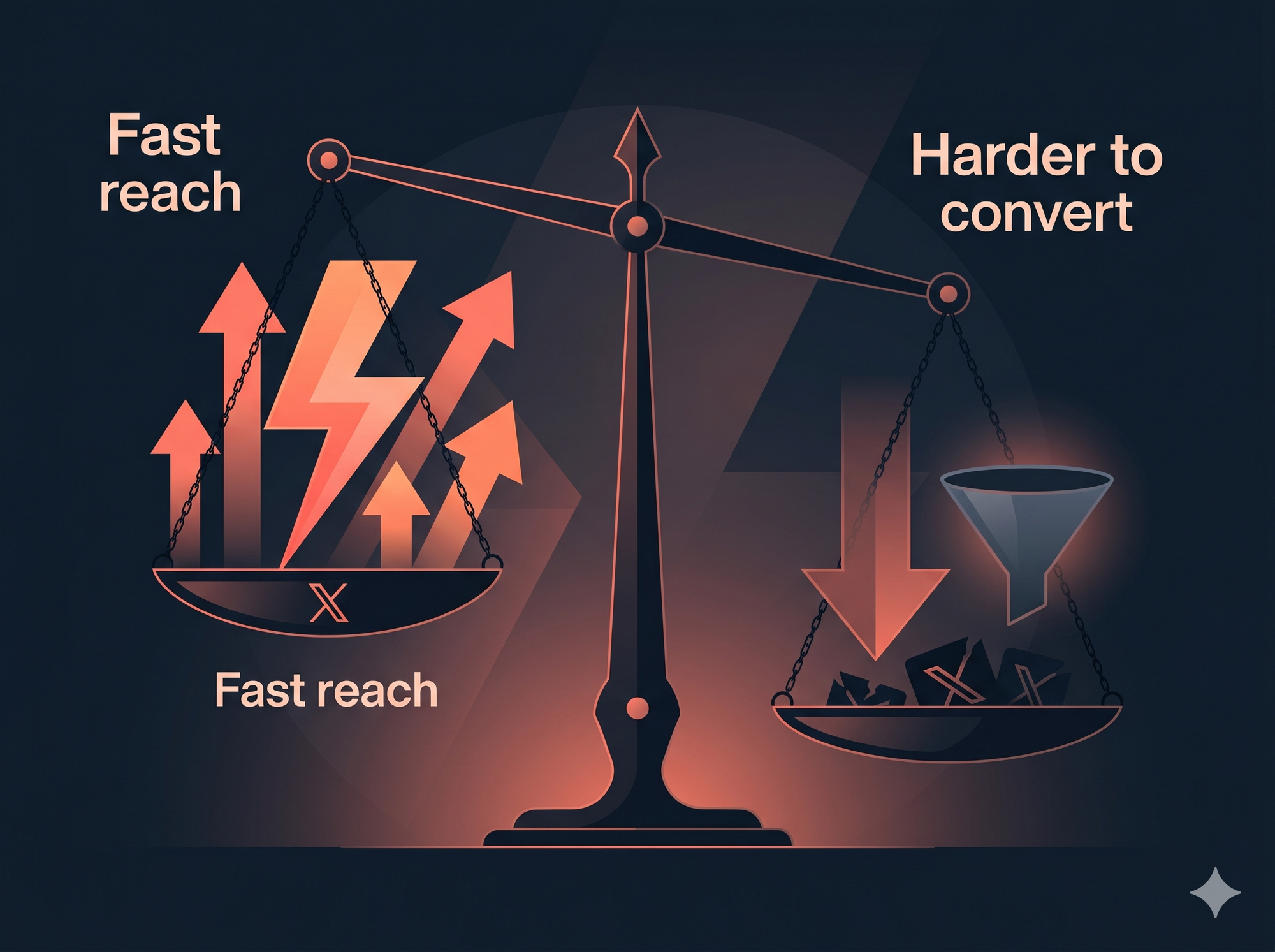
- Low lead conversion. X is great for awareness and terrible for direct conversions. Most B2B buyers are not clicking links in tweets and signing up for things. The sales cycle is longer and murkier.
- Noisy feed. The quality of content on X varies enormously. You're competing with bots, rage bait, and political drama that has nothing to do with your niche. Breaking through requires more consistency and sharper writing than LinkedIn.
- Platform instability. Since 2022, X's algorithm and monetization policies have shifted multiple times. Some creators have seen organic reach drop. Others have benefited. It's harder to predict than LinkedIn right now.
- Audience intent mismatch. People on X aren't necessarily looking to hire you or buy your product. They're looking to be entertained, informed, or provoked. Converting that audience into customers takes more steps.
Which Platform Fits Your Goal?
Which platform is better for personal branding depends entirely on your goal. LinkedIn wins for B2B leads, job searches, and professional credibility. X wins for real-time reach, thought leadership, and audience building around a sharp point of view. The table below maps nine common goals to the right platform.
| Your Goal | Better Platform |
|---|---|
| Getting a new job or promotion | LinkedIn, no question |
| Generating B2B leads or consulting clients | |
| Building credibility in a niche community | LinkedIn for depth, X for speed |
| Raising funding from VCs and angels | Both, but X gets you in the room faster |
| Building an audience around a sharp POV | X first, then cross-post to LinkedIn |
| Tech/cloud/startup thought leadership | Both are critical |
| Agency or freelance business development | |
| Media or journalism presence | X first |
| Creator monetization | X has the subscription model; LinkedIn does not |
A few specific personas worth calling out:
Founders: You need both. LinkedIn is where your buyers and investors will look you up. X is where you build the reputation that makes people look you up in the first place. The goal is for someone to discover you on X and then go validate on LinkedIn.
Consultants and coaches: LinkedIn is your primary platform. Clients hire based on trust and perceived expertise, and LinkedIn is built for exactly that kind of relationship. X is supplemental.
Tech and cloud professionals: LinkedIn is essential for recruiter visibility and professional community. X is where the fastest conversations in your field are happening. If you're a cloud engineer, DevOps professional, or developer, you want to be in both conversations.
Job seekers: Focus on LinkedIn. Full stop. That's where recruiters are.
Agencies: LinkedIn for client acquisition, X for brand and culture building. Both help, but the sales pipeline almost always runs through LinkedIn.
Why the Best Strategy Is Both
The honest answer for most serious creators is that the question shouldn't be "which one." It should be "how do I do both without it eating my entire week."
Here's the thing: the platforms are complementary. X builds your reputation quickly among a smaller, more influential audience. LinkedIn converts that reputation into professional outcomes with a broader professional base. When someone hears your name on X, they will often check your LinkedIn before they do anything else. When someone connects with you on LinkedIn, they may follow you on X to get your unfiltered thinking.
The problem with a "do both" strategy is that it doubles the work. Writing platform-native content for LinkedIn and then separately crafting something for X takes real time. Most people either neglect one platform or end up cross-posting content that sounds totally out of place.
This is exactly what CannerAI was built to solve. Instead of maintaining two separate writing workflows, CannerAI gives you a single workspace where you can create and publish to both LinkedIn and X. The research-to-post pipeline means you drop in a topic or URL, and CannerAI generates drafts for both platforms, written in your voice and adapted for each format.
The Connectors feature takes this even further. Connect your favorite YouTube channels, and CannerAI automatically generates post drafts for LinkedIn and X every time a new video goes live, styled to sound like you, not a generic summary bot. For tech professionals who consume a lot of video content, this alone saves several hours every week.
The goal isn't to post twice as much. It's to post consistently on both platforms without the mental load of starting from scratch every time.
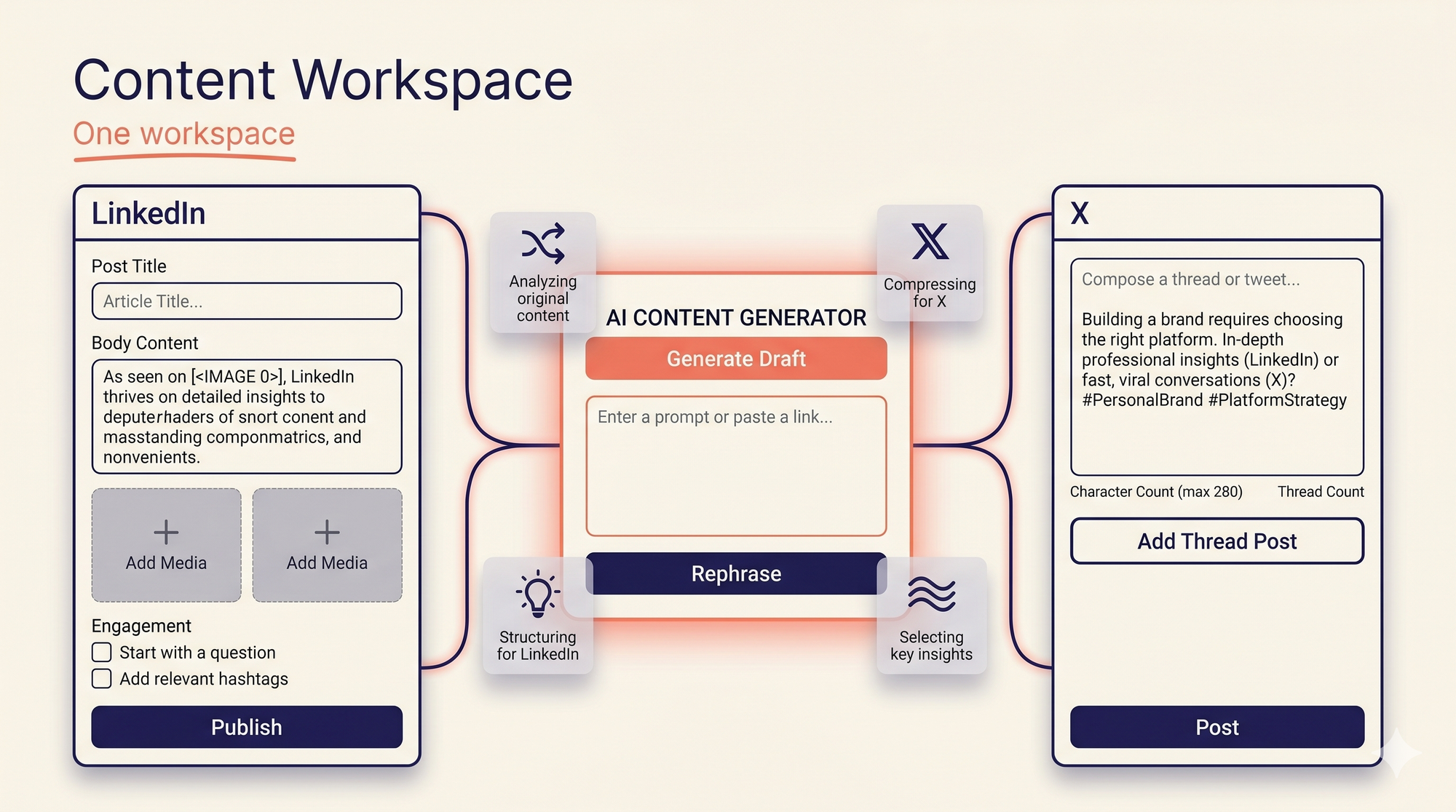
If you're a founder, creator, or professional who has been putting off building a presence on one of these platforms because it feels like too much work, that's the actual problem worth solving. Not which platform is better in the abstract.
Both platforms reward consistency above almost everything else. The people who win on LinkedIn and X are not necessarily the ones with the best writing or the most original ideas. They're the ones who show up regularly, with content that sounds like a real person wrote it.
Start with whichever platform aligns with your immediate goal. Build a rhythm there. Then add the second platform when you have a system that makes it manageable.
CannerAI generates platform-native post drafts in your voice from a single workspace. Try it free with no credit card required.
Start your free trial at cannerai.comFAQs
Should I use LinkedIn or Twitter for personal branding?
It depends on your goal. LinkedIn is better for professional credibility, B2B leads, and recruiter visibility. X is better for real-time reach, building reputation in niche communities, and thought leadership among founders and investors. Most serious creators benefit from being active on both, since the platforms complement each other rather than compete.
Is LinkedIn better than X for building a personal brand in 2026?
LinkedIn has stronger lead conversion and professional trust. X has faster viral potential and higher engagement among influential communities in tech and startups. Neither is objectively better. The right answer depends on your audience, your goal, and what kind of content you enjoy creating.
Can I cross-post the same content to LinkedIn and X?
You can, but it usually underperforms. The tone, format, and length that work on LinkedIn often fall flat on X and vice versa. Platform-native content consistently outperforms repurposed content. Tools like CannerAI can generate separate drafts for each platform from a single input so you get native feel without double the writing time.
How often should I post on LinkedIn for personal branding?
Most creators see meaningful growth posting three to five times per week on LinkedIn. Consistency matters more than frequency. Posting daily for a month and then going silent for two weeks hurts more than posting three times a week steadily. Quality and consistency beat volume every time.
How many followers do you need on X to build a personal brand?
There is no magic number. Accounts with 2,000 to 5,000 highly engaged followers in a specific niche often have more real influence than accounts with 50,000 passive followers. Focus on building a following among people who actually care about your topic, not chasing raw follower count.
Is X still worth using for professional personal branding in 2026?
Yes, for most professional niches, especially tech, startups, finance, and media. The platform has been volatile, but the core value of direct access to influential people and fast-moving conversations is still very real. The key is to stay consistent and not let platform drama distract from your actual content strategy.
What type of content performs best on LinkedIn?
Personal stories tied to professional lessons, practical how-to posts, strong opinions backed by experience, and behind-the-scenes looks at building something. LinkedIn rewards content that starts conversations in the comments. Asking a genuine question at the end of a post consistently drives engagement.
Member discussion