LinkedIn Algorithm 2026: How 360Brew Replaced Thousands of AI Models and Why Your Reach Dropped 47%
The LinkedIn algorithm just went through its biggest change in 20 years. Here's what actually happened, backed by LinkedIn's own research papers.
Quick Summary: What Changed in the LinkedIn Algorithm
| What | Details |
|---|---|
| What happened | LinkedIn replaced its entire algorithm with one AI model called 360Brew |
| Model size | 150 billion parameters (same scale as ChatGPT) |
| Tasks replaced | 30+ separate ranking models, all unified into one |
| Impact on reach | 47% median impression drop (June 2024 to May 2025) |
| Two-stage system | Stage 1: LiNR retrieval (selects ~2,000 candidates) then Stage 2: 360Brew ranking |
| Key shift | Algorithm now reads language and meaning, not just clicks and likes |
| What works now | Profile alignment, niche topics, quality comments, 90-day consistency |
| What's dead | Hook formulas, engagement pods, hashtag hacks, posting-time tricks |
| Source papers | 360Brew paper · LiNR paper |
Table of Contents
- What Was the LinkedIn Algorithm Running Before?
- The New LinkedIn Algorithm: 360Brew Explained
- The Big Shift: The LinkedIn Algorithm Reads Your Words Now
- The Hidden Gate in the LinkedIn Algorithm Nobody Talks About
- How to Win With the New LinkedIn Algorithm in 2026
- The Real Challenge: Maintaining Quality for the LinkedIn Algorithm
- The Bottom Line on the LinkedIn Algorithm in 2026
- FAQ: LinkedIn Algorithm 2026
Your LinkedIn reach didn't just dip.
It cratered.
AuthoredUp analyzed over 3 million posts. Median impressions per post went from 1,211 in June 2024 to 636 by May 2025.
That's a 47% drop in one year.
Creators panicked. "Is the LinkedIn algorithm broken?" posts flooded the feed.
But the LinkedIn algorithm wasn't broken. It was being rebuilt from scratch.
They replaced the entire thing with a single AI system called 360Brew.
I went through LinkedIn's actual research papers, both the 360Brew foundation model paper and the LiNR GPU retrieval paper, so I could explain what the new LinkedIn algorithm actually does in plain English.
Here's the full story.
What Was the LinkedIn Algorithm Running Before?
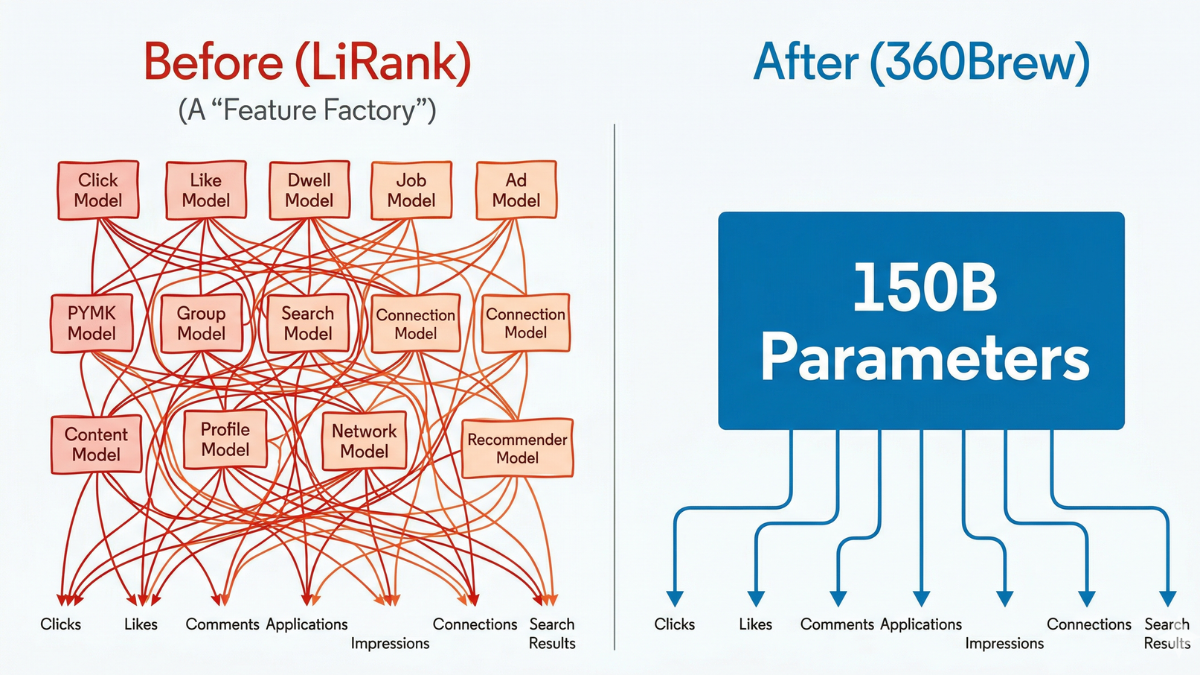
The old LinkedIn algorithm was built on a system called LiRank.
Think of it like a factory with dozens of separate machines.
One machine predicted if you'd click "Apply" on a job. Another predicted if you'd "Like" a post. Another powered "People You May Know." Yet another handled ad targeting.
Each machine was built by a different team. Each took years to build. Each needed constant maintenance.
Engineers described the whole LinkedIn algorithm as a "feature factory". Thousands of hand-built signals feeding thousands of separate models.
The problem? It was incredibly hard to improve. And easy to game.
Figure out which signals the LinkedIn algorithm was counting? You could hack your way to reach. Hooks, pods, hashtags, posting times. The entire creator playbook existed because the old algorithm was predictable.
Not anymore.
The New LinkedIn Algorithm: 360Brew Explained
In January 2025, LinkedIn's research team published a paper describing the new engine behind the LinkedIn algorithm.
A single AI model with 150 billion parameters.
For context: that's the same scale and architecture behind tools like ChatGPT and Claude. But this one was trained purely on LinkedIn's professional data.
Here's what makes it wild:
This one model handles 30+ different tasks. Feed ranking. Job recommendations. People You May Know. Ad targeting. Search results. Notifications. All of it.
Tasks that previously required dedicated teams working for years? Replaced by one model built in nine months.
The paper says 360Brew matches or beats every legacy system it replaced, without being specifically tuned for each task.
The LinkedIn algorithm in 2026 is fundamentally a different animal from what it was in 2024.
The Big Shift: The LinkedIn Algorithm Reads Your Words Now
This is the part that changes everything for creators.
The old LinkedIn algorithm counted behaviors. Clicks. Likes. Dwell time. It was a calculator.
The new LinkedIn algorithm reads language.
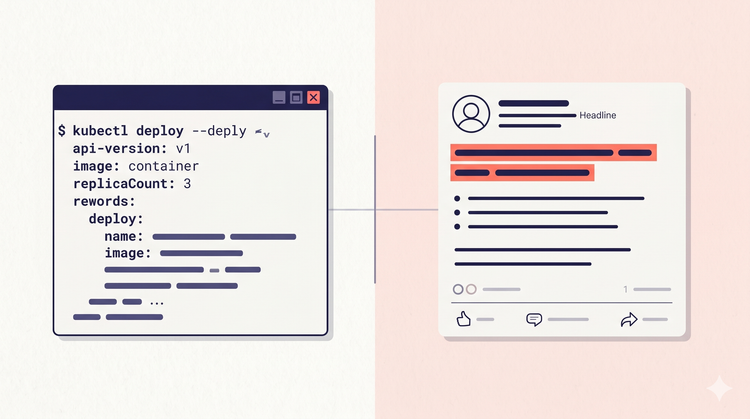
It uses something the researchers call a "textual interface." Instead of processing numbers, the model processes natural language descriptions of every situation.
Imagine the AI reading something like:
"This person is a VP of Marketing who engages with AI strategy content. This post discusses enterprise data governance. How likely is a meaningful interaction?"
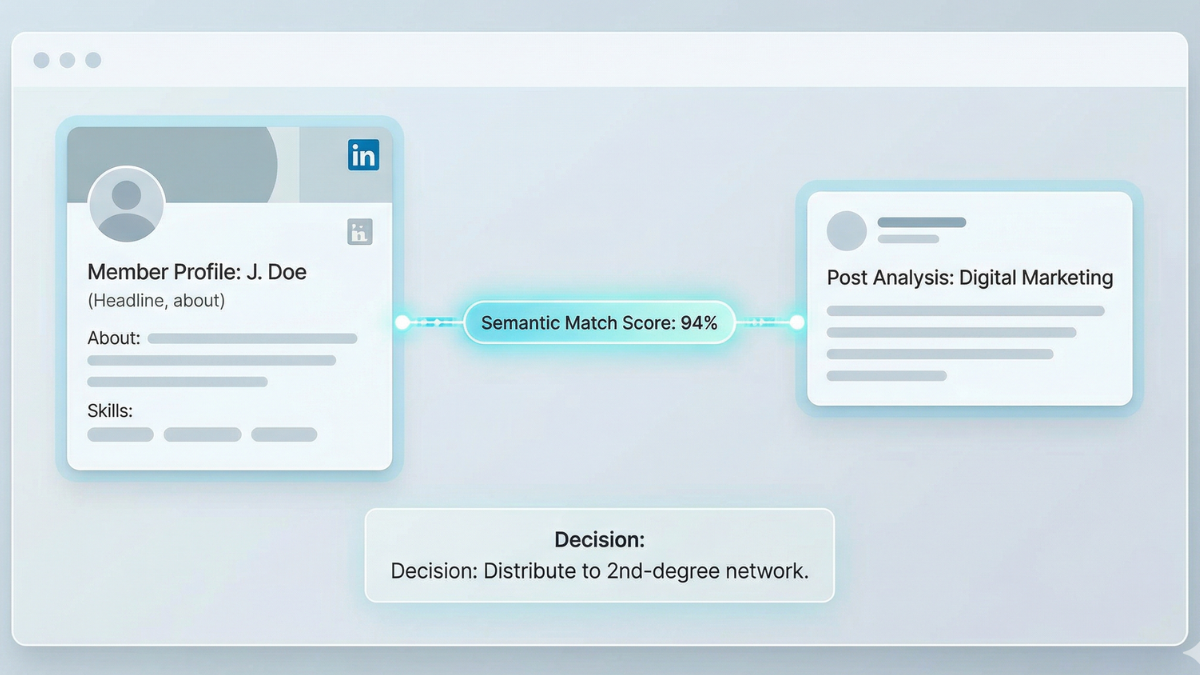
That's roughly what's happening under the hood of the LinkedIn algorithm in 2026.
Here's why that matters:
The old algorithm needed you to click on "CRM" posts to know you cared about CRM.
The new LinkedIn algorithm understands that "revenue intelligence" and "Salesforce pipeline optimization" are related concepts, even if you never used those exact words.
It reads your profile. It reads your posts. It reads your comment history. And it builds a semantic map of who you are professionally.
You can't game a LinkedIn algorithm that understands what you're saying.
The Hidden Gate in the LinkedIn Algorithm Nobody Talks About
Here's the thing most "LinkedIn algorithm update" posts miss entirely.
360Brew is NOT the first system your content encounters.
Before your post reaches 360Brew, it has to survive a completely separate AI system.
It's called LiNR (LinkedIn Neural Retrieval).
LiNR is a GPU-powered retrieval engine. Its job inside the LinkedIn algorithm:
Take millions of potential posts and narrow them to roughly ~2,000 candidates per user.
Only those 2,000 candidates get passed to 360Brew for ranking.
Think of it like this:
- LiNR = the bouncer who decides who gets into the club
- 360Brew = the host who decides where everyone sits
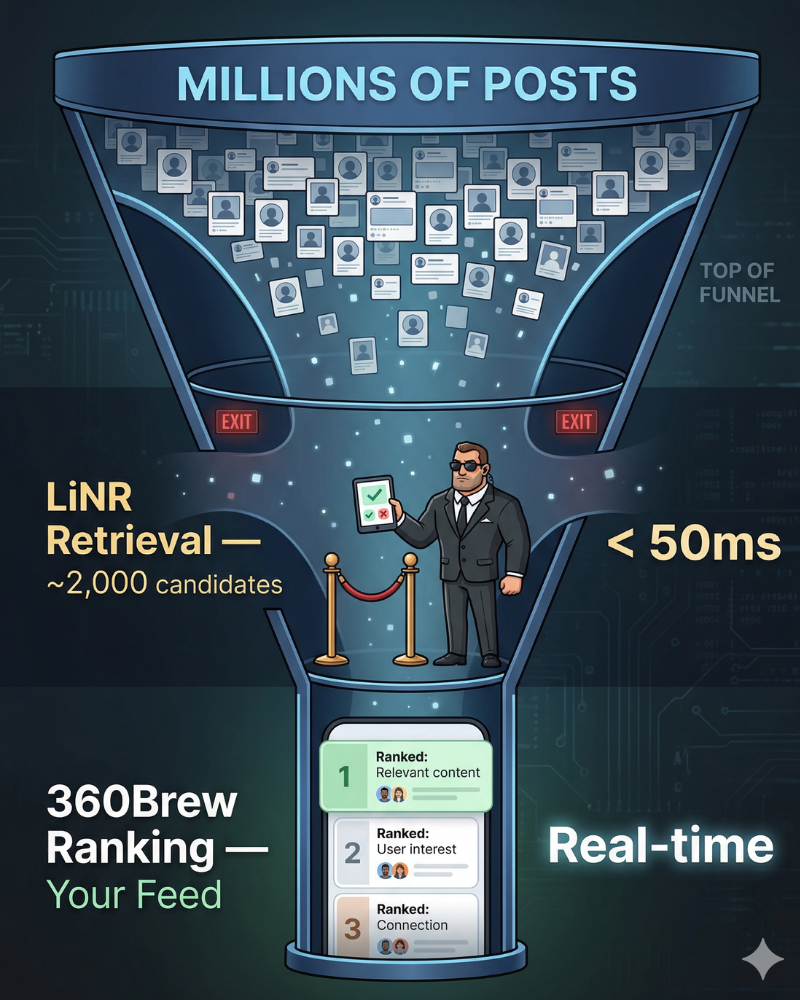
If LiNR doesn't select your post, 360Brew never sees it. Doesn't matter how good your content is.
What does LiNR look at? Your profile text. Your topic signals. Network relevance. Language. Category. And it does all of this using GPU-accelerated neural search across a billion-item index.
LinkedIn's own data shows this retrieval stage is especially critical for newer accounts and smaller networks. For these users, better retrieval was the primary driver of engagement, not ranking.
So if you're still growing on LinkedIn, understanding this part of the LinkedIn algorithm matters more than anything else.
How to Win With the New LinkedIn Algorithm in 2026
I'll keep this simple. No fluff. Just what the research supports.
1. Your Profile = Your LinkedIn Algorithm Signal
The LinkedIn algorithm reads your headline, about section, experience, and skills.
It builds a unified understanding of who you are from ALL of these.
If your headline says "SaaS Growth Marketer" but your posts are about crypto trading, the algorithm gets confused. It can't find a coherent audience for you.
Fix: Pick 2-4 topics. Align your profile text with those topics. Name real tools, companies, and methodologies.
2. Your First 2-3 Lines Carry the Most Weight
LLMs process text sequentially. Attention degrades with length.
The LinkedIn algorithm puts the most weight on your opening lines. Not because of "hook" psychology. Because that's how the AI architecture works.
Fix: Lead with your most valuable insight. Don't build up to it. Start with it.
3. Niche Beats Broad in the 2026 LinkedIn Algorithm
The old LinkedIn algorithm loved viral, broadly appealing content.
The new LinkedIn algorithm loves specific, topically focused content.
A focused post about "how we reduced SaaS churn by 12% using cohort analysis" will outperform a generic post about "leadership lessons" because the algorithm can match specific content to specific professionals.
Fix: Go narrow. The narrower your topic, the better the LinkedIn algorithm can find the exact right audience.
4. Quality Comments > Lots of Reactions
This is a big one.
"Great post!" and "Love this!" are now classified as engagement noise by the LinkedIn algorithm. Posts generating these shallow reactions may actually be penalized.
What the algorithm rewards: comments that add insight, ask real questions, or share relevant experience.
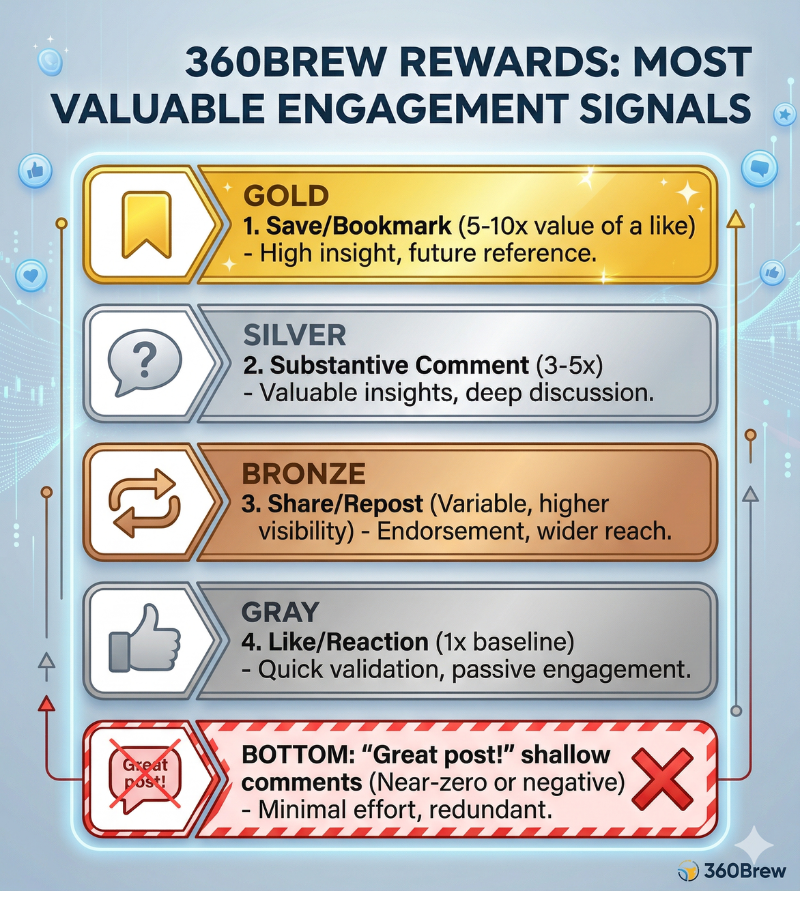
Fix: Write content that invites real discussion. And reply to comments thoughtfully. Your replies are algorithm signals too.
5. Give the LinkedIn Algorithm 90 Days
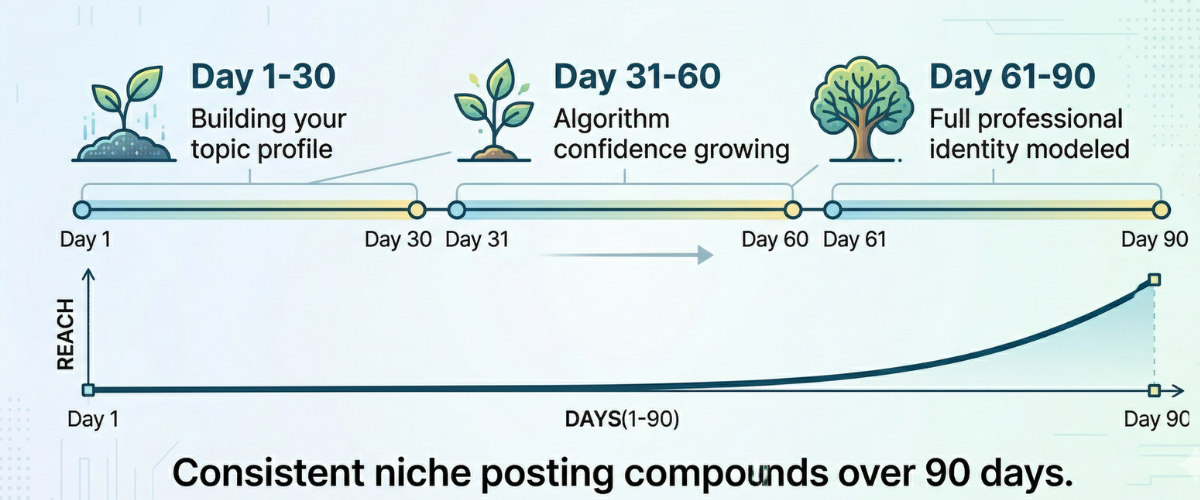
Multiple analyses, including AuthoredUp and the Trust Insights guide, suggest it takes about 90 days of consistent posting for the LinkedIn algorithm to fully model your professional identity.
Sporadic posting or constant topic-switching resets this process.
Fix: Show up consistently on your chosen topics. Patience is now a structural advantage.
The Real Challenge: Maintaining Quality for the LinkedIn Algorithm
Here's the tension nobody addresses enough.
The LinkedIn algorithm in 2026 rewards depth. Research. Specificity. Authentic voice.
But producing that kind of content every week? It's exhausting.
This is why many serious LinkedIn creators have started building research-to-content workflows. The goal isn't to create faster. It's to create better without burning out.
Some do it manually. Others use tools that help them turn research into voice-consistent posts.
CannerAI is one example of this approach. You feed in a URL or topic, and it produces content anchored in that source material while matching your writing style. The key difference from generic AI writers: it researches first, then writes. That matters when the LinkedIn algorithm can tell the difference between genuine topical authority and surface-level imitation.
But I want to be clear: no tool creates expertise. The LinkedIn algorithm is designed to surface people who genuinely know their subject. If the knowledge isn't there, the workflow won't save you.
The Bottom Line on the LinkedIn Algorithm in 2026
The LinkedIn algorithm just went through the most significant change in its history.
Here's the cheat sheet:
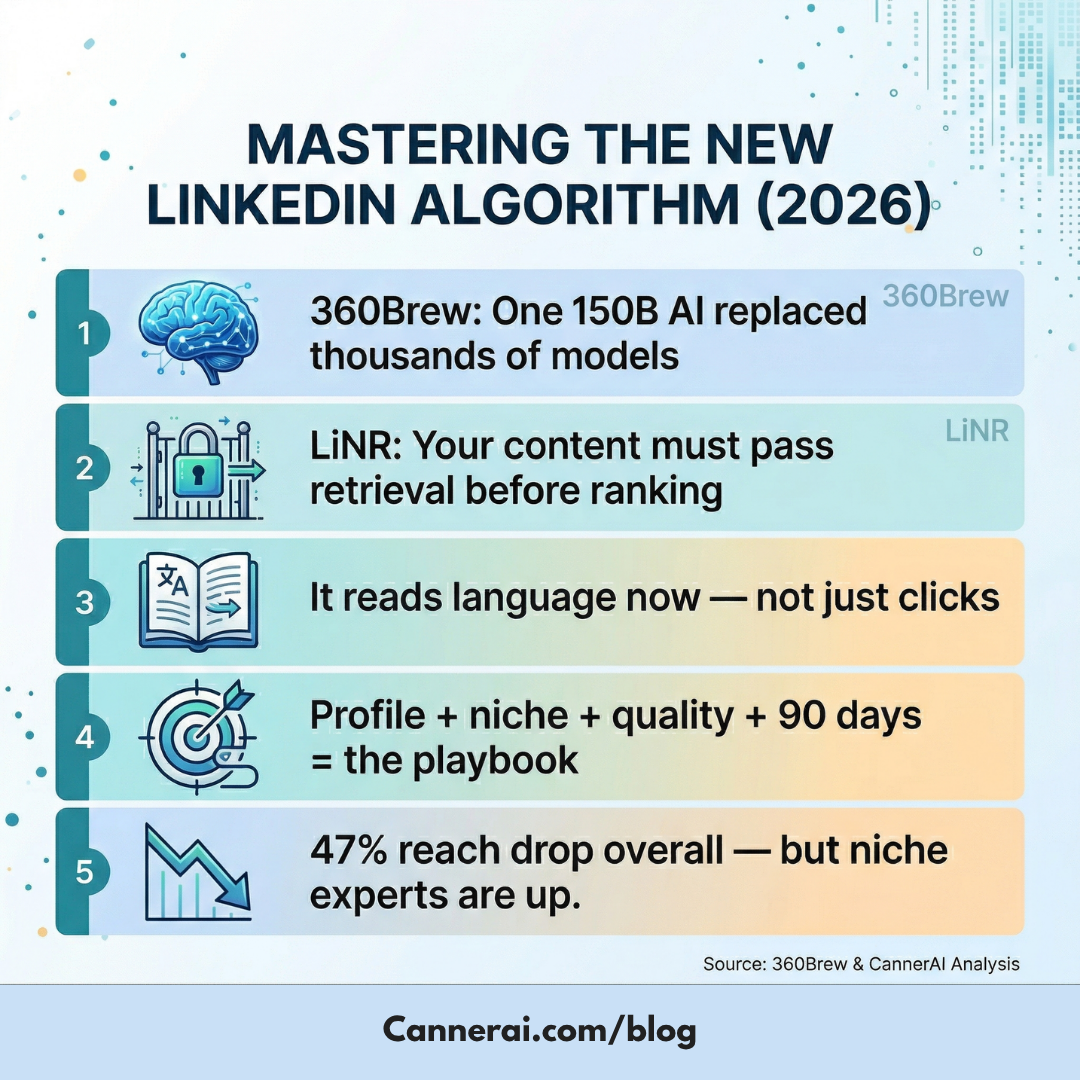
- 360Brew = one 150B parameter AI that replaced thousands of models (source)
- LiNR = the retrieval gate your content must pass BEFORE 360Brew sees it (source)
- The LinkedIn algorithm reads language now, not just clicks and likes
- Profile alignment + topic focus + quality engagement + 90-day consistency = the new playbook
- Reach dropped 47% across the board, but relevant reach for niche experts is up (source)
The old game was about sending signals to the LinkedIn algorithm.
The new game is about being worth finding.
FAQ: LinkedIn Algorithm 2026
How does the LinkedIn algorithm work in 2026?
The LinkedIn algorithm in 2026 runs on a two-stage AI pipeline. First, a retrieval system called LiNR scans a billion-item index and narrows millions of posts down to about 2,000 candidates per user. Then, a 150-billion parameter foundation model called 360Brew ranks those candidates by reading the semantic meaning of your content, your profile, and the viewer's professional context. Unlike the old algorithm, which counted clicks and likes, the 2026 LinkedIn algorithm understands language and evaluates whether your content demonstrates genuine expertise.
Why did my LinkedIn reach drop in 2025?
LinkedIn replaced thousands of separate ranking models with one unified AI system called 360Brew. This new LinkedIn algorithm is far more selective about relevance. AuthoredUp's analysis of 3 million+ posts found that median impressions dropped 47% between June 2024 and May 2025. The drop is structural, not a bug. More creators are posting, the algorithm is stricter about topical relevance, and the bar for content quality is significantly higher.
What is LinkedIn 360Brew?
360Brew is a 150-billion parameter, decoder-only foundation model that powers the LinkedIn algorithm. It was built by LinkedIn's Core AI team in nine months and handles over 30 different tasks across the platform, including feed ranking, job recommendations, people suggestions, ad targeting, and search results. It replaced the previous system (LiRank) which relied on thousands of separate models maintained by different engineering teams.
Is the LinkedIn algorithm the same as 360Brew?
Not exactly. 360Brew is the ranking component of the LinkedIn algorithm, but it is only the second stage. Before 360Brew ranks your content, a separate retrieval system called LiNR decides whether your post is even eligible for ranking. Together, LiNR and 360Brew form the two-stage pipeline that makes up the core of the LinkedIn algorithm in 2026.
How do I beat the LinkedIn algorithm in 2026?
You don't "beat" the LinkedIn algorithm anymore because it reads and understands language. Instead, align your strategy with what the algorithm rewards: make your profile consistent with your content topics, lead posts with your most substantive insight, focus on niche topics rather than broad appeal, earn quality comments instead of shallow reactions, and post consistently for at least 90 days so the algorithm can model your professional identity. Multiple independent analyses confirm these strategies.
Do hashtags still work in the LinkedIn algorithm?
Hashtags have minimal impact on the 2026 LinkedIn algorithm. The new system understands topics semantically by reading the actual language in your post, not by scanning for hashtags. The old algorithm used hashtags as categorical signals, but 360Brew evaluates meaning and context directly. Hashtags won't hurt your post, but they are no longer a meaningful lever for reach.
Do engagement pods still work with the new LinkedIn algorithm?
No. The 2026 LinkedIn algorithm classifies shallow engagement like "Great post!" and "Love this!" as noise. Posts generating primarily shallow reactions may actually be penalized. The algorithm now evaluates comment quality, not comment quantity. Engagement pods that generate generic comments are counterproductive under the new system.
How long does it take for the LinkedIn algorithm to learn my profile?
Approximately 90 days. Both AuthoredUp and the Trust Insights LinkedIn Algorithm Guide suggest it takes about 90 days of consistent, topically aligned posting for the LinkedIn algorithm to fully model your professional identity and optimize your content distribution. Sporadic posting or frequent topic changes can reset or fragment this process.
Based on LinkedIn's published research: 360Brew Foundation Model | LiNR GPU Neural Retrieval | AuthoredUp LinkedIn Data Analysis
About the Author: Piyush Sachdeva is the founder of CannerAI, an AI-powered content creation and scheduling platform for founders and creators. With 52,000+ LinkedIn followers and a background in DevOps engineering at Google, he writes about the intersection of building in public, LinkedIn content strategy, and the technical systems behind social platforms.
Member discussion